Loreal Beauty Assistant
Scope
0 - 1 · Gen AI
Client
Loreal
Year
[2024]
Industry
Beauty and Fragrance
Define and pilot the first-of-its-kind generative AI beauty assistant for L'Oreal Paris consumers. In a market full of products, help consumers decide the best product for them, based on their unique needs.
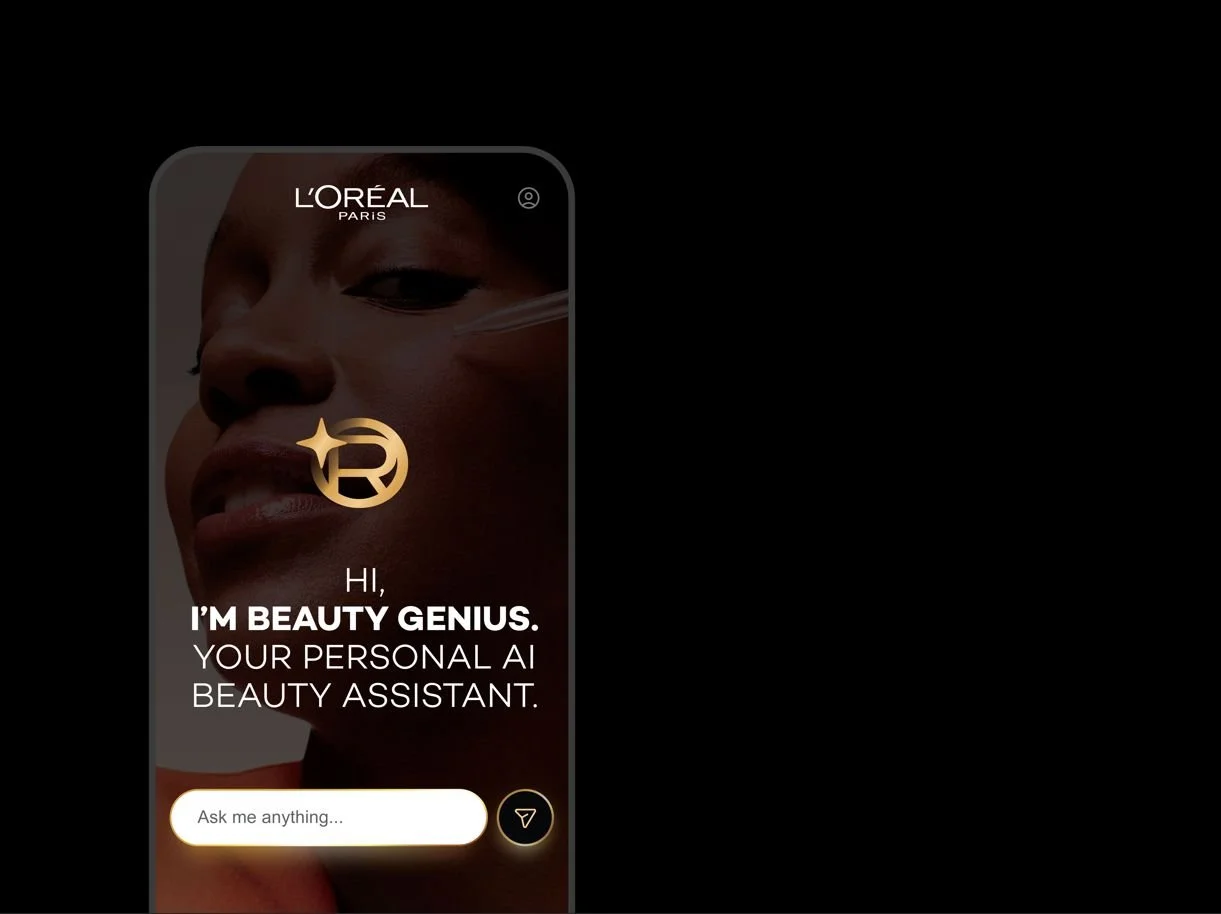
L'Oreal came to us with a concept, not a defined product: a "virtual beauty companion." Before any design work could start, the team had to burn down a set of open questions: what do people actually want to know before buying a beauty product, when do different individuals need skin or makeup recommendations, which sources of advice do consumers already trust, and would a companion even solve the problems people hit when shopping in the first place. None of that was assumed going in, all of it had to be researched.

Research & Discovery
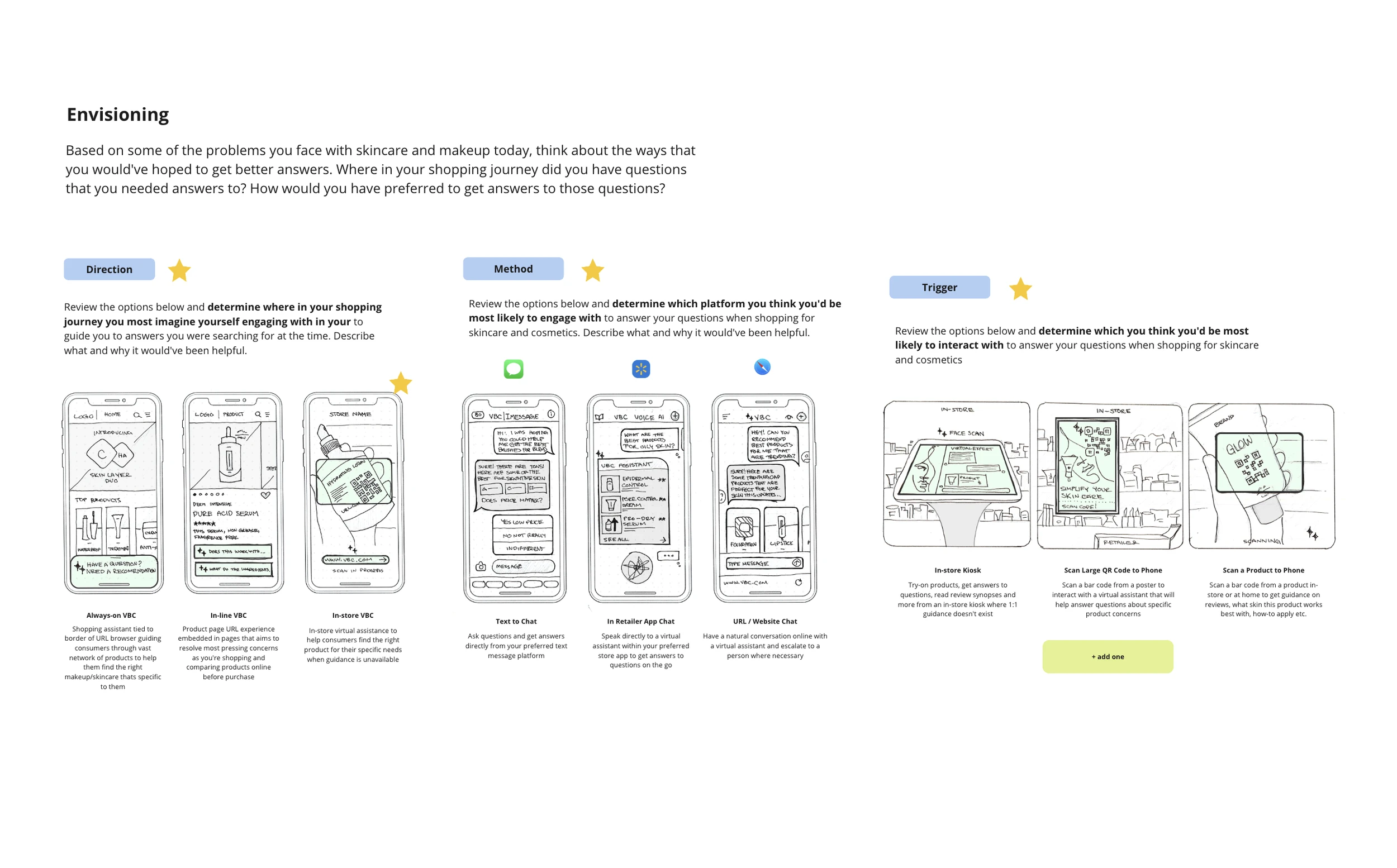
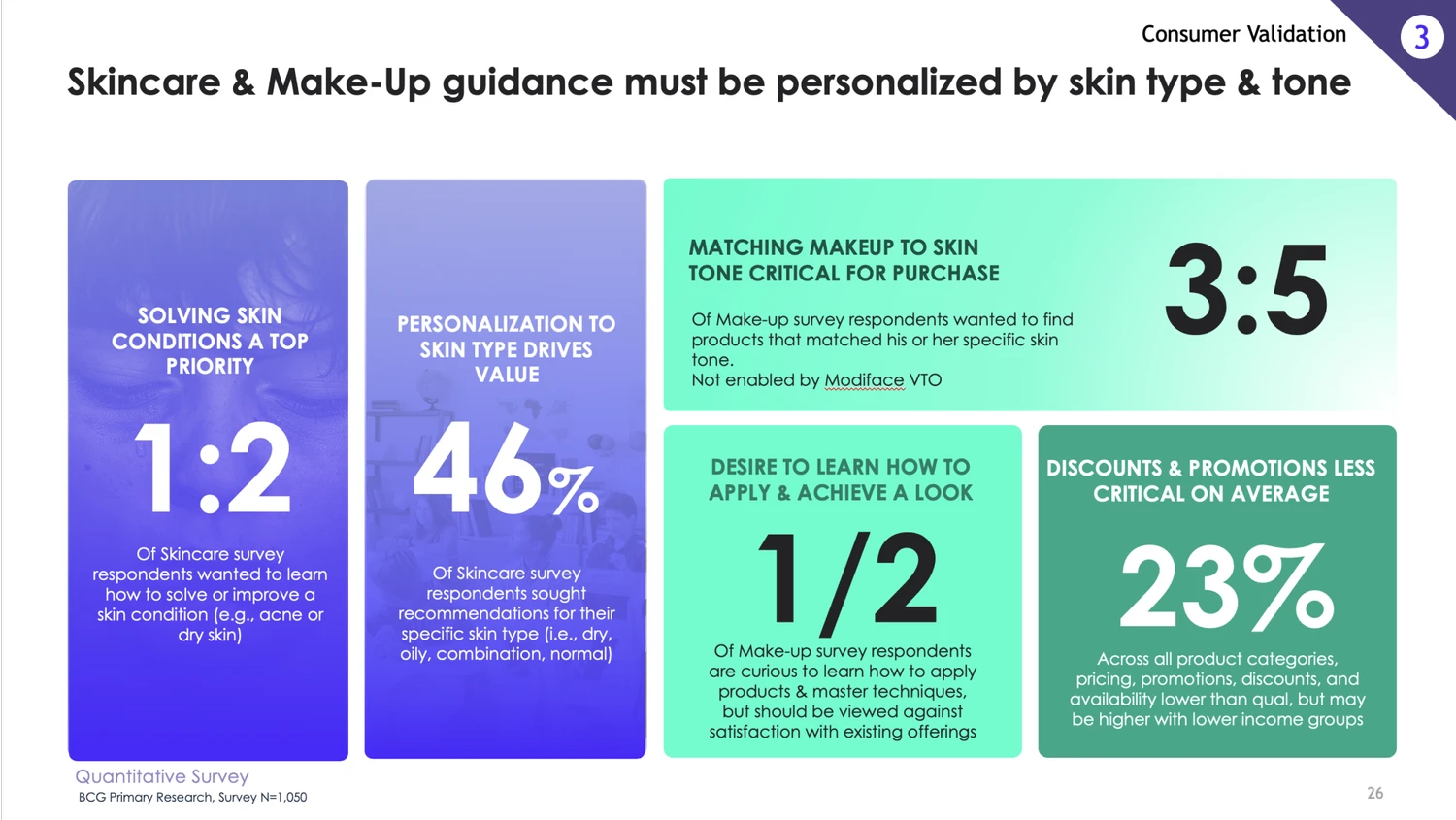
We ran 18+ qualitative interviews, an in-depth review of L'Oreal's internal documentation, and a quantitative survey of over 1,000 respondents. The consistent finding: consumers were overwhelmed by the sheer number of products on the market and were looking for something suited to their specific attributes, whether that was skin type, shade, or finding a color that actually worked for them. That insight became the foundation for what the assistant needed to do, not just recommend products, but recommend the right product for a specific person.
Prototype & Alpha
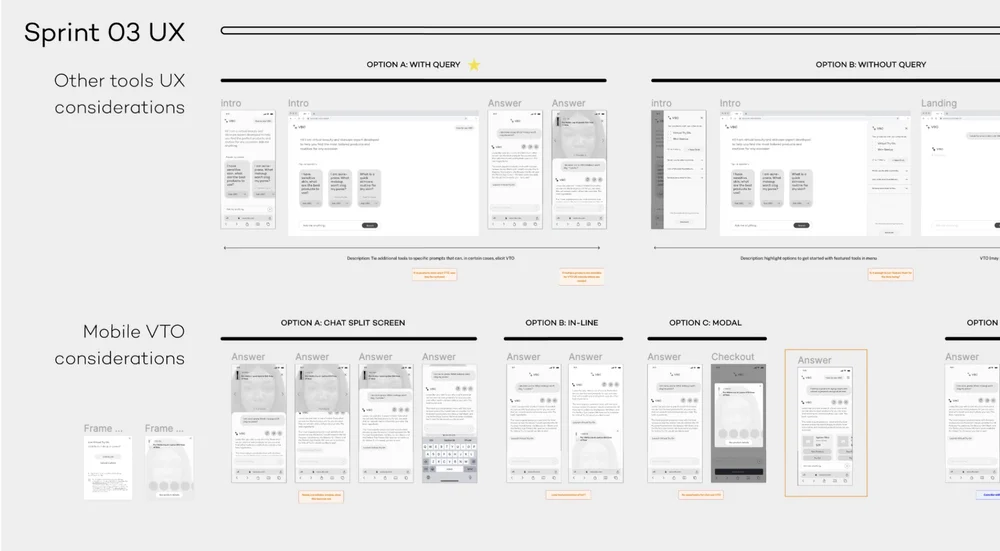
From those insights, we built a mid-fidelity, end-to-end prototype of the Beauty Genius experience and piloted it internally for testing. The alpha surfaced two real problems: the product was jumping to a recommendation too quickly, and its behavior was overly dependent on the underlying prompt messaging. One concrete example, part of the model had been trained on French-language data, and during testing it started responding in French to participants who were speaking English. Those findings gave us a clear list of what needed to change before beta.

Beta Refinement
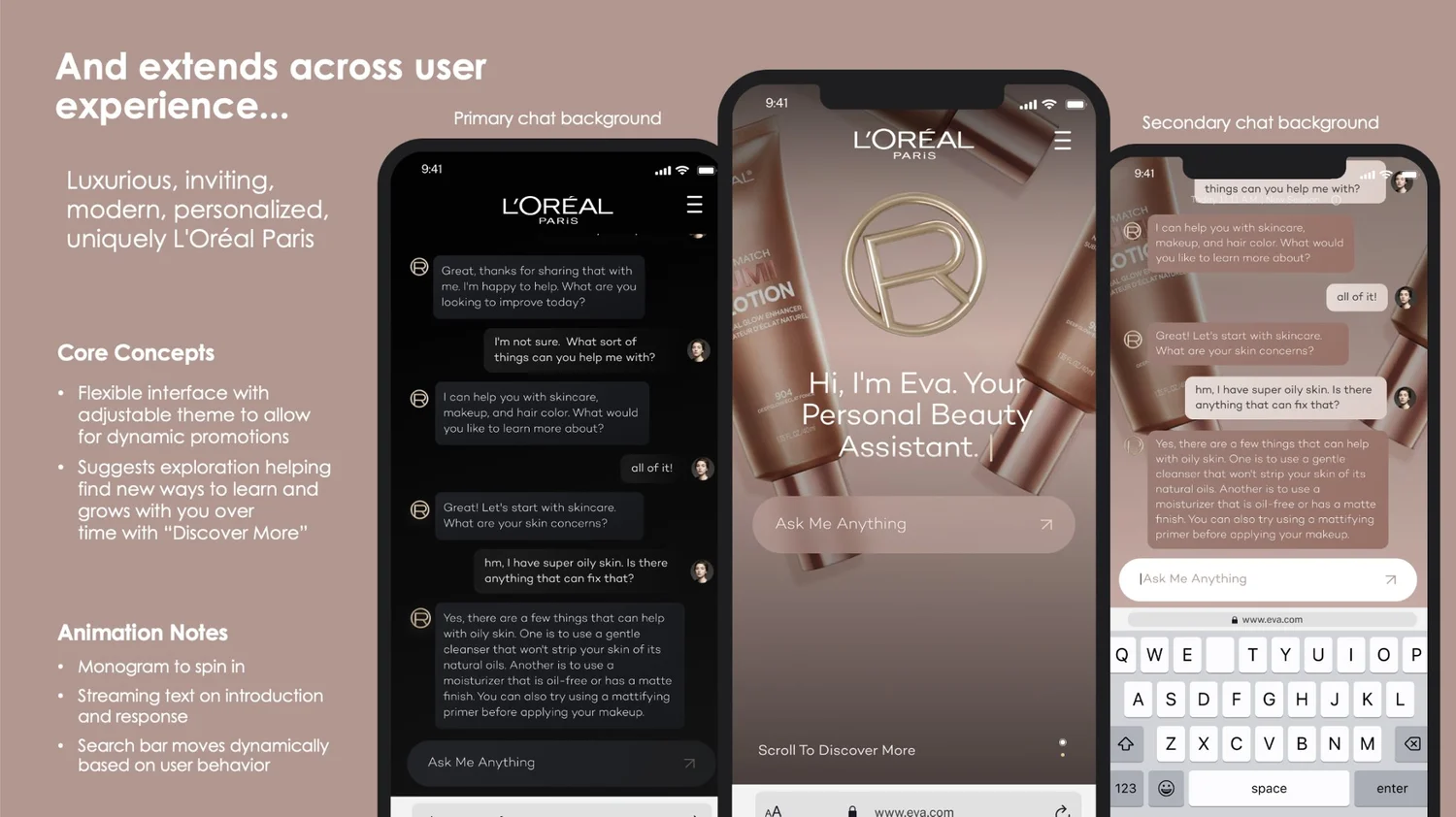
With alpha results in hand, we moved into a hi-fidelity beta experience, redesigning the flow to slow down the path to a recommendation and reduce its dependence on fragile prompt behavior. We worked directly with L'Oreal's Global Chief Digital Officer to refine the final visual direction, aligning the experience with both what we'd learned from users and the brand's broader vision for the product.


Deliverables
Conversational product concept and visual language
AI-assisted beauty recommendation flows
Interaction prototype and experience guidelines

Loreal Beauty Assistant
Scope
0 - 1 · Gen AI
Client
Loreal
Year
[2024]
Industry
Beauty and Fragrance
Define and pilot the first-of-its-kind generative AI beauty assistant for L'Oreal Paris consumers. In a market full of products, help consumers decide the best product for them, based on their unique needs.
L'Oreal came to us with a concept, not a defined product: a "virtual beauty companion." Before any design work could start, the team had to burn down a set of open questions: what do people actually want to know before buying a beauty product, when do different individuals need skin or makeup recommendations, which sources of advice do consumers already trust, and would a companion even solve the problems people hit when shopping in the first place. None of that was assumed going in, all of it had to be researched.
Research & Discovery
We ran 18+ qualitative interviews, an in-depth review of L'Oreal's internal documentation, and a quantitative survey of over 1,000 respondents. The consistent finding: consumers were overwhelmed by the sheer number of products on the market and were looking for something suited to their specific attributes, whether that was skin type, shade, or finding a color that actually worked for them. That insight became the foundation for what the assistant needed to do, not just recommend products, but recommend the right product for a specific person.
Prototype & Alpha
From those insights, we built a mid-fidelity, end-to-end prototype of the Beauty Genius experience and piloted it internally for testing. The alpha surfaced two real problems: the product was jumping to a recommendation too quickly, and its behavior was overly dependent on the underlying prompt messaging. One concrete example, part of the model had been trained on French-language data, and during testing it started responding in French to participants who were speaking English. Those findings gave us a clear list of what needed to change before beta.
Beta Refinement
With alpha results in hand, we moved into a hi-fidelity beta experience, redesigning the flow to slow down the path to a recommendation and reduce its dependence on fragile prompt behavior. We worked directly with L'Oreal's Global Chief Digital Officer to refine the final visual direction, aligning the experience with both what we'd learned from users and the brand's broader vision for the product.
Deliverables
Conversational product concept and visual language
AI-assisted beauty recommendation flows
Interaction prototype and experience guidelines
Loreal Beauty Assistant
Scope
0 - 1 · Gen AI
Client
Loreal
Year
[2024]
Industry
Beauty and Fragrance
Define and pilot the first-of-its-kind generative AI beauty assistant for L'Oreal Paris consumers. In a market full of products, help consumers decide the best product for them, based on their unique needs.
L'Oreal came to us with a concept, not a defined product: a "virtual beauty companion." Before any design work could start, the team had to burn down a set of open questions: what do people actually want to know before buying a beauty product, when do different individuals need skin or makeup recommendations, which sources of advice do consumers already trust, and would a companion even solve the problems people hit when shopping in the first place. None of that was assumed going in, all of it had to be researched.
Research & Discovery
We ran 18+ qualitative interviews, an in-depth review of L'Oreal's internal documentation, and a quantitative survey of over 1,000 respondents. The consistent finding: consumers were overwhelmed by the sheer number of products on the market and were looking for something suited to their specific attributes, whether that was skin type, shade, or finding a color that actually worked for them. That insight became the foundation for what the assistant needed to do, not just recommend products, but recommend the right product for a specific person.
Prototype & Alpha
From those insights, we built a mid-fidelity, end-to-end prototype of the Beauty Genius experience and piloted it internally for testing. The alpha surfaced two real problems: the product was jumping to a recommendation too quickly, and its behavior was overly dependent on the underlying prompt messaging. One concrete example, part of the model had been trained on French-language data, and during testing it started responding in French to participants who were speaking English. Those findings gave us a clear list of what needed to change before beta.
Beta Refinement
With alpha results in hand, we moved into a hi-fidelity beta experience, redesigning the flow to slow down the path to a recommendation and reduce its dependence on fragile prompt behavior. We worked directly with L'Oreal's Global Chief Digital Officer to refine the final visual direction, aligning the experience with both what we'd learned from users and the brand's broader vision for the product.
Deliverables
Conversational product concept and visual language
AI-assisted beauty recommendation flows
Interaction prototype and experience guidelines