American Express Business Checking
Scope
0-1
Client
Amex
Year
[2023]
Industry
Finance
De-risk the concept of an all-digital business checking account and define a differentiated, insight-driven experience for American Express to expand its core business product portfolio.
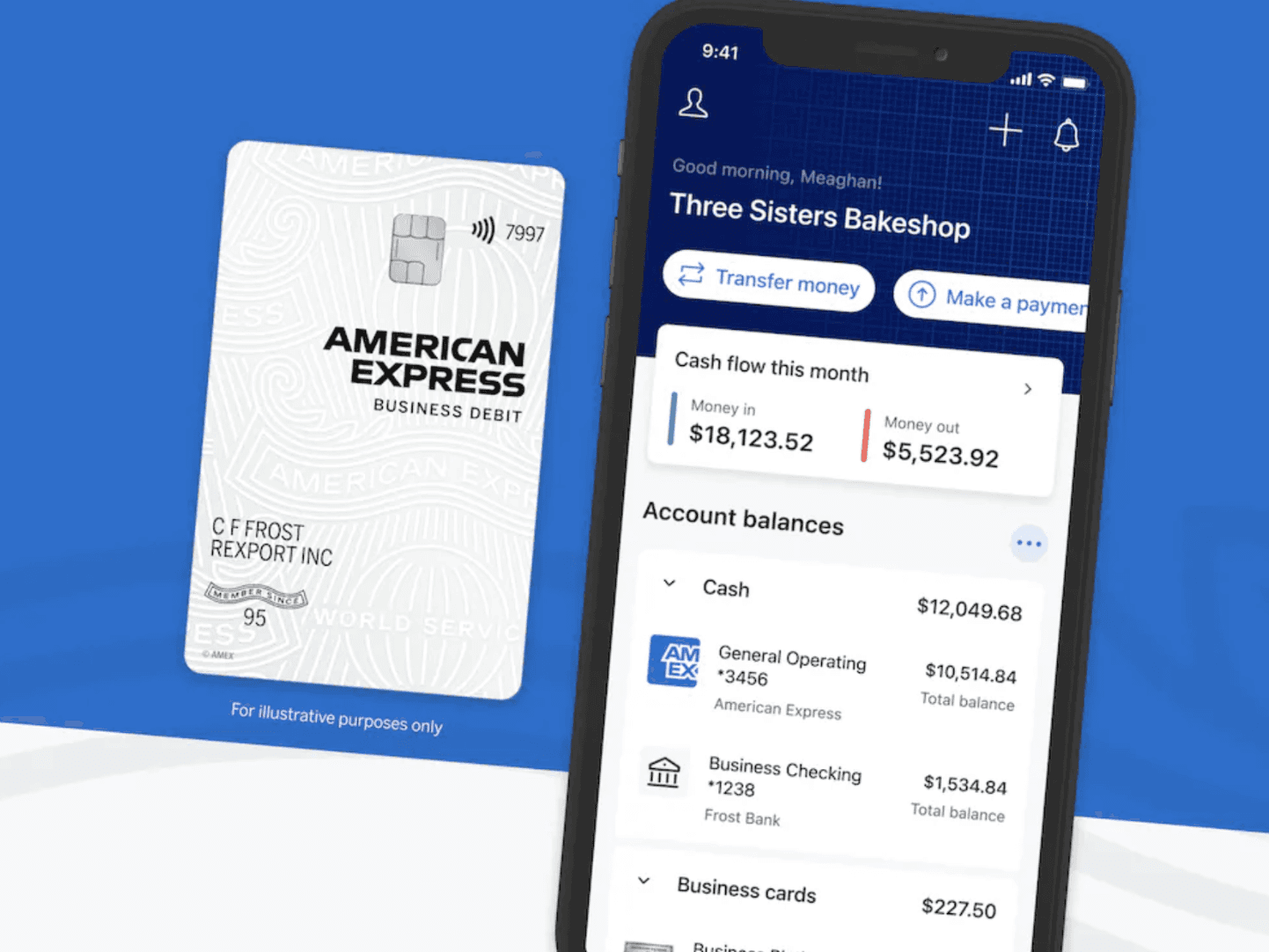
Entering a crowded space meant Amex was taking on real risk, both the risk of building a product SMB owners wouldn't actually prefer over their existing bank, and the risk of diluting a well-established brand with an unproven concept. Before any significant build investment, the team needed evidence that a fully digital business checking product could earn trust with entrepreneurs and hold up against incumbents who already had that trust.
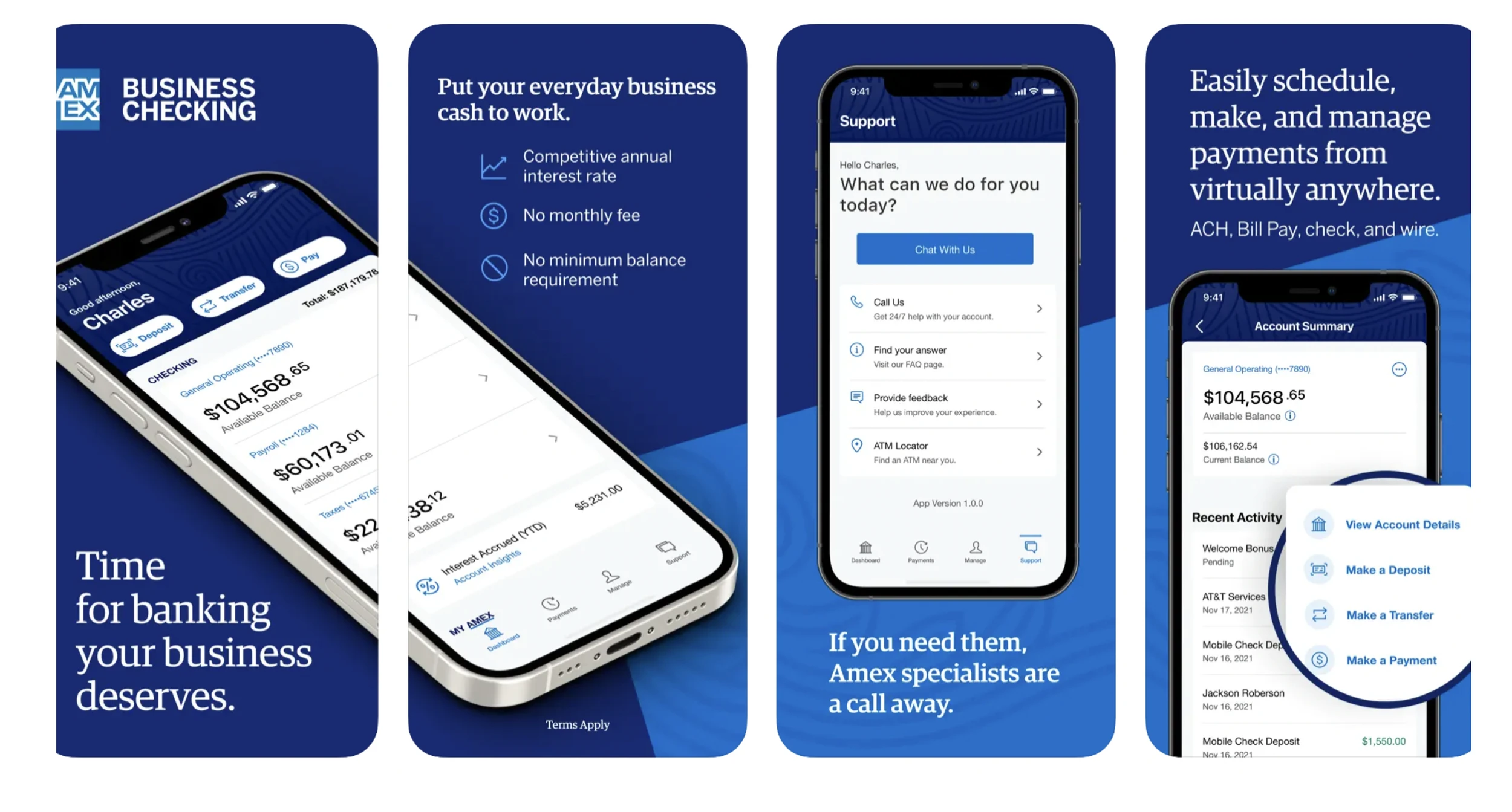
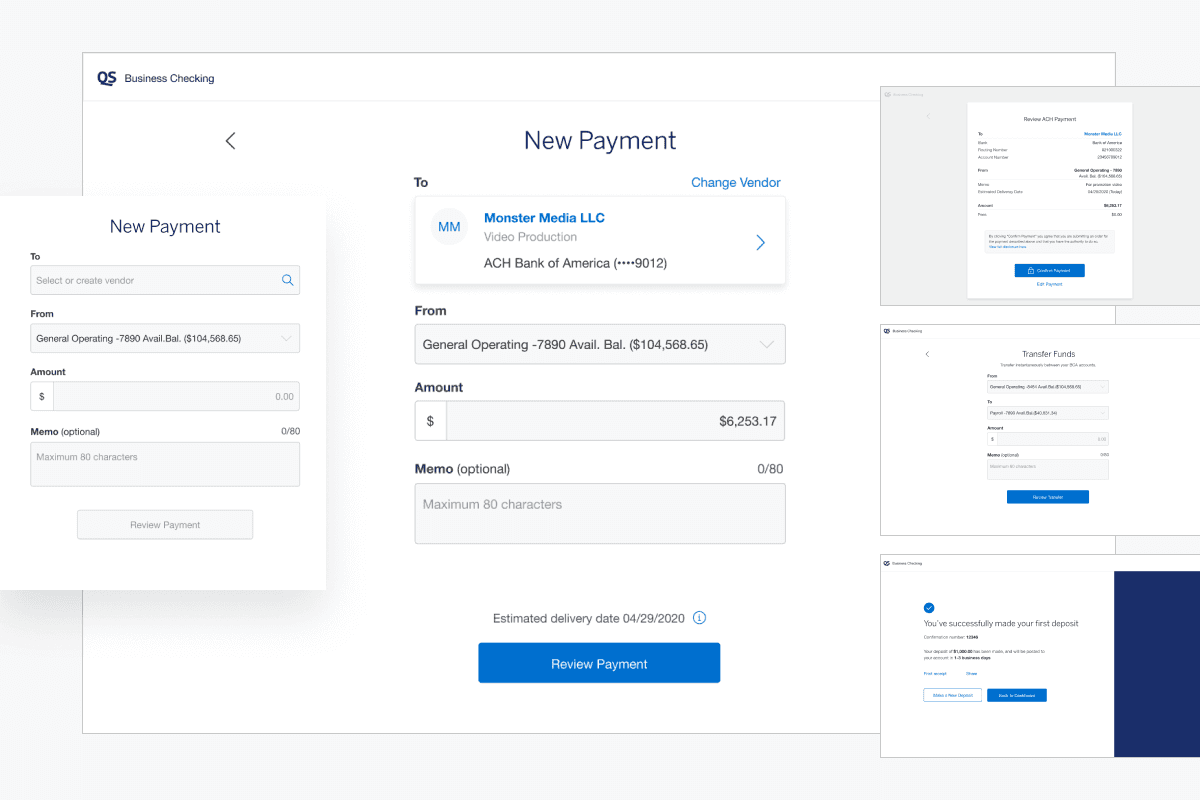
Amex was entering unfamiliar territory: a fully digital business checking product for a customer base whose real priorities weren't yet clear. Research surfaced three consistent priorities among entrepreneurs: high yield, transparency, and ease of use. Payments stood out as the most frequent and most frustrating part of their existing banking. We built an 8-week prototype focused on ease of use in payments, the riskiest assumption in the product, to test it before it shaped a much larger investment.

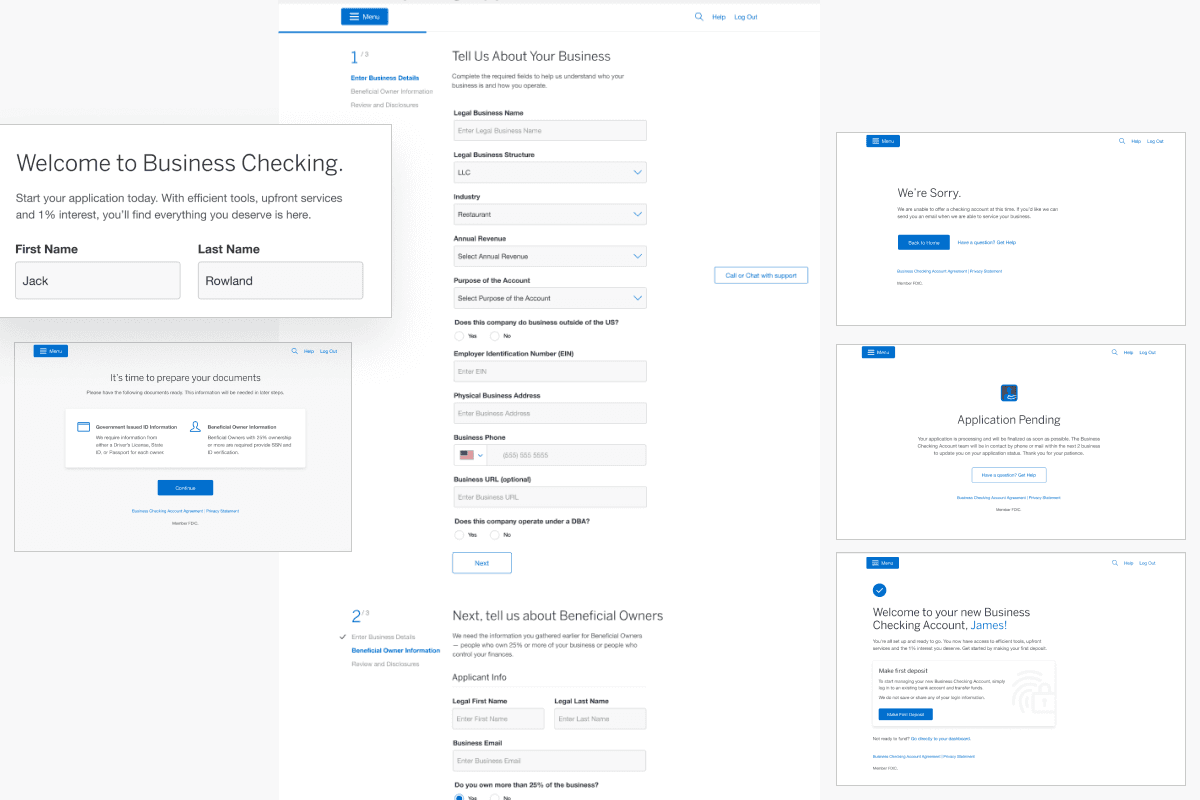
Once the prototype earned approval and the project scaled to $20mm, the challenge was building a differentiated product inside a legacy design system, without breaking consistency or blending in. We kept Amex's existing design standards everywhere consistency mattered, and reimagined UX/UI where research said it mattered most. This shipped as epics and user journeys across the alpha and beta releases, differentiated where it counted and consistent everywhere else.


The working team grew from 11 people to over 110. At that scale, the risk was losing the reasoning behind decisions as new members joined without context. We documented customer insights, decision reasoning, and new components and behaviors across devices and screen widths into a shared library, so new team members could work from it immediately without diluting the thinking that got the product there.


Deliverables
User research
Wireframes
Information architecture
Prototyping

American Express Business Checking
Scope
0-1
Client
Amex
Year
[2023]
Industry
Finance
De-risk the concept of an all-digital business checking account and define a differentiated, insight-driven experience for American Express to expand its core business product portfolio.
Entering a crowded space meant Amex was taking on real risk, both the risk of building a product SMB owners wouldn't actually prefer over their existing bank, and the risk of diluting a well-established brand with an unproven concept. Before any significant build investment, the team needed evidence that a fully digital business checking product could earn trust with entrepreneurs and hold up against incumbents who already had that trust.
Amex was entering unfamiliar territory: a fully digital business checking product for a customer base whose real priorities weren't yet clear. Research surfaced three consistent priorities among entrepreneurs: high yield, transparency, and ease of use. Payments stood out as the most frequent and most frustrating part of their existing banking. We built an 8-week prototype focused on ease of use in payments, the riskiest assumption in the product, to test it before it shaped a much larger investment.
Once the prototype earned approval and the project scaled to $20mm, the challenge was building a differentiated product inside a legacy design system, without breaking consistency or blending in. We kept Amex's existing design standards everywhere consistency mattered, and reimagined UX/UI where research said it mattered most. This shipped as epics and user journeys across the alpha and beta releases, differentiated where it counted and consistent everywhere else.
The working team grew from 11 people to over 110. At that scale, the risk was losing the reasoning behind decisions as new members joined without context. We documented customer insights, decision reasoning, and new components and behaviors across devices and screen widths into a shared library, so new team members could work from it immediately without diluting the thinking that got the product there.
Deliverables
User research
Wireframes
Information architecture
Prototyping
American Express Business Checking
Scope
0-1
Client
Amex
Year
[2023]
Industry
Finance
De-risk the concept of an all-digital business checking account and define a differentiated, insight-driven experience for American Express to expand its core business product portfolio.
Entering a crowded space meant Amex was taking on real risk, both the risk of building a product SMB owners wouldn't actually prefer over their existing bank, and the risk of diluting a well-established brand with an unproven concept. Before any significant build investment, the team needed evidence that a fully digital business checking product could earn trust with entrepreneurs and hold up against incumbents who already had that trust.
Amex was entering unfamiliar territory: a fully digital business checking product for a customer base whose real priorities weren't yet clear. Research surfaced three consistent priorities among entrepreneurs: high yield, transparency, and ease of use. Payments stood out as the most frequent and most frustrating part of their existing banking. We built an 8-week prototype focused on ease of use in payments, the riskiest assumption in the product, to test it before it shaped a much larger investment.
Once the prototype earned approval and the project scaled to $20mm, the challenge was building a differentiated product inside a legacy design system, without breaking consistency or blending in. We kept Amex's existing design standards everywhere consistency mattered, and reimagined UX/UI where research said it mattered most. This shipped as epics and user journeys across the alpha and beta releases, differentiated where it counted and consistent everywhere else.
The working team grew from 11 people to over 110. At that scale, the risk was losing the reasoning behind decisions as new members joined without context. We documented customer insights, decision reasoning, and new components and behaviors across devices and screen widths into a shared library, so new team members could work from it immediately without diluting the thinking that got the product there.
Deliverables
User research
Wireframes
Information architecture
Prototyping